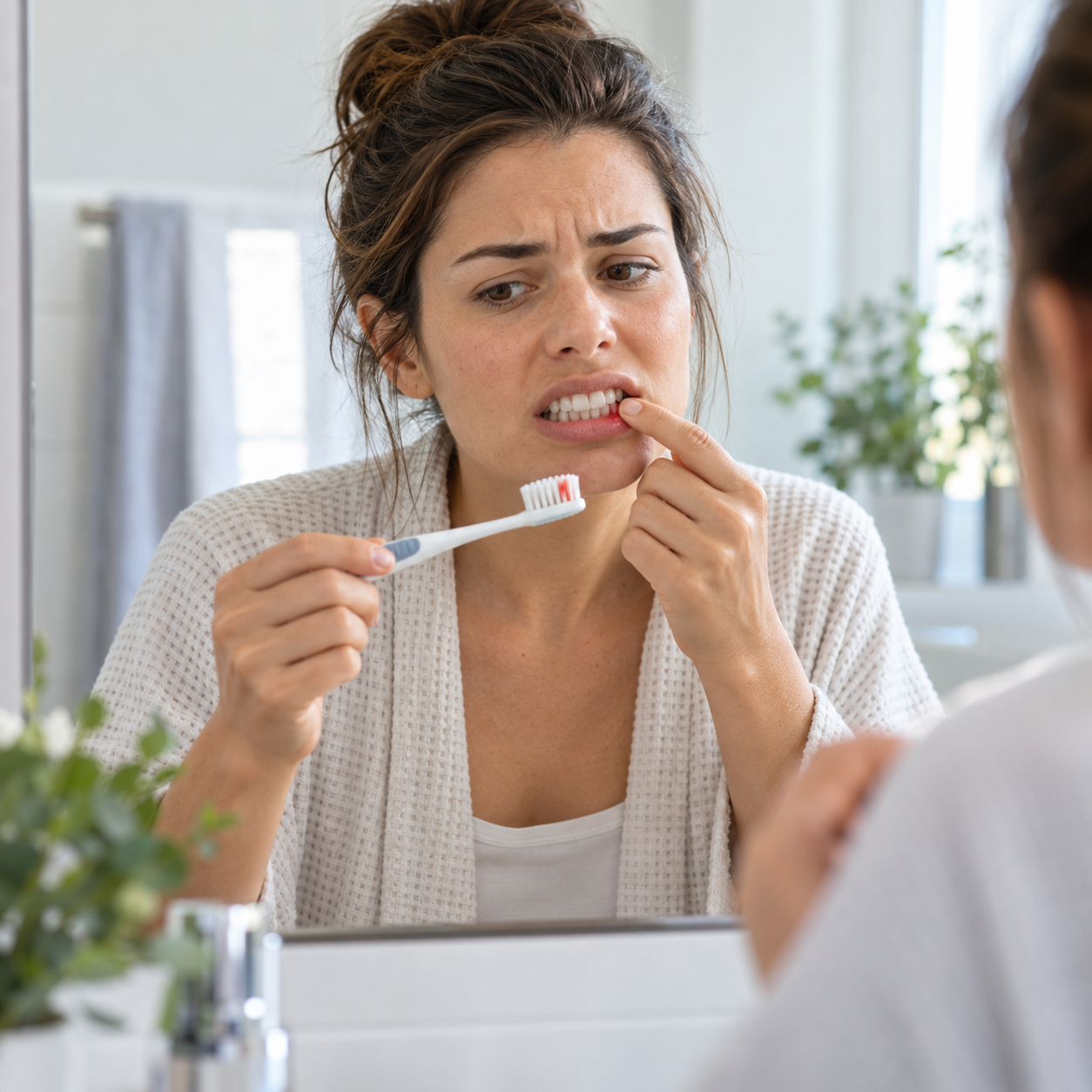
Are Bleeding Gums Normal When Brushing?
No. Repeated bleeding is not a sign of healthy gums. Plaque-related inflammation is a common cause, while forceful brushing, medications, and hormonal changes may also contribute. A dental examination can distinguish
gingivitis from more advanced gum disease and identify appropriate care.
When patients notice blood on their toothbrush, some respond by scrubbing harder or switching to a firmer brush. I understand the instinct: if something needs cleaning, more effort should help. But that is not how I want patients to approach bleeding gums.
I often describe bleeding as the tip of the iceberg. What you notice at home is a signal. My job is to find out what is behind it—not assume that every bleeding spot means advanced gum disease, or dismiss it as a brushing problem.
Why Do Gums Bleed When Brushing?
The first thing I look for is plaque and tartar around the teeth. Plaque is a sticky film containing bacteria. It can irritate the gum tissue, leading to inflammation and bleeding. Plaque can also harden into tartar, which we call calculus. Unlike soft plaque,
tartar needs professional removal; brushing harder will not remove it.
That is why my starting recommendation is an examination and appropriate professional cleaning, rather than simply a different toothbrush. We need to understand what is present before deciding how to address it.
What Does a Dentist Check For?
During an evaluation, I look at the whole picture: your health history, medications, gum measurements, and the places where your gums bleed. We chart those bleeding points because their location helps us understand the pattern, not just whether bleeding happens.
One important measurement is
probing depth: the distance from the gum edge to the base of the space between the tooth and gum. It is not a direct measurement to the bone. Deeper readings can reflect swollen tissue, loss of tooth support, or both, so one number alone does not establish the diagnosis.
Dental X-rays may also help assess
bone supporting the teeth.
The distinction we are working toward is important.
Gingivitis involves gum inflammation and can be reversed; periodontitis involves damage to the tissues and bone supporting the teeth. Bleeding alone cannot tell you which situation you have. That is what the examination is for.
How Should You Brush Bleeding Gums?
While you arrange an appointment, focus on consistent, gentle cleaning. My basic instructions are straightforward and align with the
American Dental Association’s home-care recommendations:
- Brush twice a day for about two minutes with fluoride toothpaste.
- Cover the cheek-facing surfaces, chewing surfaces, and inside surfaces of your teeth.
- Clean between your teeth daily with floss or another appropriate interdental cleaner.
I often recommend an electric toothbrush after reviewing a patient’s technique. But electric does not automatically mean softer, and it does not replace professional cleaning.
Both manual and powered toothbrushes can work well. Choose soft bristles and use gentle pressure rather than trying to scrub the bleeding away.
What I want to understand is not only whether you brush, but how you reach each surface. That gives us something specific to work on together instead of simply telling you to brush more.
When Should Bleeding Gums Be Checked?
If bleeding keeps happening, I want you to have it evaluated—even if you are brushing and flossing consistently.
Regular or concerning bleeding warrants an appointment; you do not need to wait until six months have passed since your last visit.
Persistent bad breath and visible buildup are other things I ask patients to notice. Loose teeth or pain when chewing deserve prompt attention.
Very sore, swollen gums or a newly loose tooth warrant an urgent dental appointment. These signs do not establish a diagnosis at home, but they change how quickly you should seek care.
Heavy bleeding or bleeding that will not stop needs urgent professional help, rather than a trial of a new brushing routine.
Can Medications or Hormones Cause Bleeding Gums?
Yes.
Pregnancy-related changes can contribute to gum inflammation, and blood thinners can increase bleeding. That is one reason I ask about your health and medications at the beginning of the evaluation.
My concern is when someone assumes that a medication or hormonal change explains everything and that there is nothing they can do. I still want to check for local plaque and tartar. Those factors can matter alongside your medical history; they are not competing explanations.
If you take a blood thinner,
do not stop or change it on your own. Discuss bleeding with your dentist and prescribing clinician.
What Should You Do About Bleeding Gums?
You do not need to diagnose the bleeding before asking for help. At Omni Dental Center, we can evaluate your gums and discuss what your findings mean for your daily care and treatment. To arrange a visit, contact 712-328-8573. Learn more about our
gum disease treatment options.